
PPL Course in India:
Learn to Fly for Personal Use,10th Pass Welcome
Not every pilot starts with an airline in mind. A Private Pilot Licence (PPL), the entry-level licence, lets you fly light aircraft as pilot-in-command for personal and recreational purposes, and it is the only pilot licence you can begin with a Class 10 pass. VFTI's PPL programme gives you real stick time on glass-cockpit trainers from day one.
Private Pilot License (PPL)
Fly for the pure love of it. The entry-level licence that authorises you to fly light aircraft as pilot-in-command for personal and recreational purposes (not for hire or remuneration) — ground theory and flight lessons leading to the DGCA PPL exams and flight test. Academically lighter than CPL, and a natural first step if you plan to go commercial later.
PPL ELIGIBILITY
- ›Minimum age 17 years
- ›Class 10 pass — no Physics/Maths requirement at 12th
- ›Valid DGCA Class 2 Medical
- ›Working command of English
PPL TRAINING & CURRICULUM
- ›Basic ground theory — CPL core subjects, PPL depth
- ›Dual instruction and supervised solo flight lessons
- ›DGCA PPL theory exams and flight test
- ›Glass-cockpit trainers from day one
WHAT YOUR LICENCE ALLOWS
- ›Fly light aircraft as pilot-in-command
- ›Carry passengers for non-commercial flying
- ›Log hours that count toward a future CPL
- ›Upgrade path: PPL → CPL → ATPL
What a PPL Allows, and What It Does Not
A PPL authorises you to fly light aircraft as pilot-in-command and carry passengers on non-commercial flights. It does not allow you to fly for hire or remuneration. Treat it as a licence to fly for the love of it or as a first rung towards a professional career. Either way, you earn the privileges of a pilot-in-command: planning the flight, making the decisions and owning the outcome.
Personal and recreational flying, carrying passengers without payment, logging hours
Paid flying of any kind. For that, you need a CPL
PPL Eligibility: Lighter Than CPL
The PPL is academically lighter than the CPL, which is why it suits students who are not yet sure about a flying career.
Age: minimum 17 years
Education: Class 10 pass. No Physics or Maths requirement at 12th
Medical: valid DGCA Class 2 Medical
Language: working command of English, the language of exams, cockpit and ATC
If you can meet these four, you can begin. No prior flying experience is expected.
PPL Training at VFTI: What the Course Includes
Ground theory
You study the core CPL subjects at PPL depth: air regulations, navigation, meteorology and aircraft technical knowledge, as a base you can build on later. Learn how it connects in our DGCA Ground Classes.
Dual and solo flying
Training starts with dual instruction alongside an instructor and progresses to supervised solo flights, where you take command for the first time.
Exams and flight test
You prepare for the DGCA PPL theory exams and the PPL flight test.
Glass-cockpit trainers
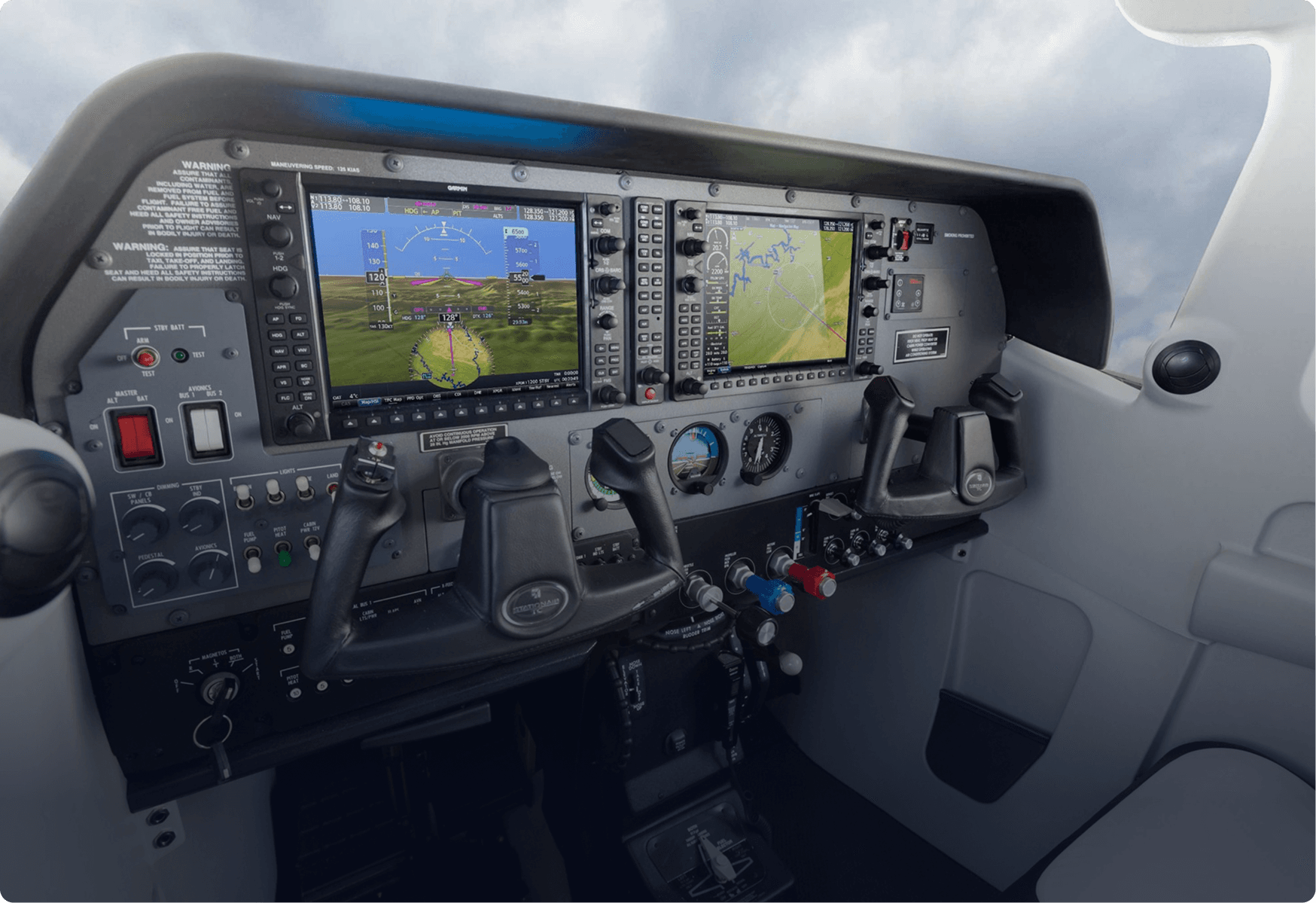
Fly modern glass-cockpit aircraft such as the Cessna 172 Skyhawk from the first lesson, so you learn current avionics, not outdated panels.
PPL vs CPL: Which Should You Choose?
Still deciding? Hours flown under a PPL can count towards a future CPL, so starting with a PPL is rarely wasted effort. The upgrade path is PPL → CPL → ATPL, and our guide to DGCA CPL requirements shows exactly what the next step asks of you.
Who Takes a PPL Course?
Students after Class 10 who want an early start in aviation
Hobby flyers who want to fly for themselves, family and friends
Future CPL aspirants testing their aptitude before the larger commitment
Working professionals who want a serious weekend skill
How Long Will It Take?
DGCA sets a minimum of 40 flying hours for a PPL, but most students need more depending on how often they fly, weather, and how quickly they clear the theory exams. Flying regularly in a stretch is the fastest way to stay sharp. Long gaps between lessons mean repeating exercises you had already mastered, which adds hours and cost without adding skill.
Ask us for a realistic schedule based on your school, college or work commitments, and we will plan lessons around your availability, not the other way round.
MINIMUM FLYING HOURS SET BY DGCA FOR A PPL
Frequently Asked Questions
Can I get a PPL after 10th?
Yes. A Class 10 pass is enough, along with age 17 and a valid DGCA Class 2 Medical.
Can I earn money with a PPL?
No. A PPL is strictly for non-commercial flying. A CPL (Commercial Pilot License) is required for paid pilot employment.
Can I convert PPL hours into a CPL later?
Yes! Your logged flying hours under a PPL count directly towards DGCA CPL requirements, making it a great stepping stone.
Take the First Step
Call +91 9319193602 or select Enquire Now to check your eligibility and available start dates.